
Table of Contents
- Scale 1: D Dorian
- Scale 2: D Melodic Minor
- Scale 3: A Harmonic Minor
- Scale 4: A Melodic Minor #4
- Scale 5: G Dominant Diminished (Messiaen Mode 2)
- Scale 6: Bb Jazz Major
- Scale 7: C Jazz Dominant
- Scale 8: B Bebop Dorian
- Scale 9: A Bebop Melodic Minor
- Scale 10: The Tcherepnin Scale - Key of C (Messiaen Mode 3)
- Just for the Curious: Five more scales
- Internal Links
- Recommendations
Introduction
In 1992, REH released a video for Allan Holdsworth. In it, he gave a little glimpse of his process. His way of displaying and treating scales was of paramount importance.
Included with each of the scale diagrams is a list of the Common Chords which can be derived from that scale.
This article is a work in progress and this topic deserves much expansion, which will be implemented gradually. For the time being, please enjoy this initial listing!
Without Allan Holdsworth, this website wouldn’t exist.
No 1 D Dorian

- Allan’s symbol: Dx
- This scale is the second mode of the C Major Scale. Holdsworth actually defined this scale in his video as the “C, Dm, G7” scale. We know that Allan, not unlike Pat Martino, preferred ‘conversion to minor’ whenever possible so the scale is named not as C major a type of D minor scale, which for jazz-improvisation is actually much more efficient. As Allan said in this 1991 interview: “Basically I have a way of breaking down chords into scales and I usually take them to the nearest relative minor and I work on it from there.”
On 13 September 2014 there was a “meet & greet” with Allan Holdsworth in The Cutting Room in NYC. Here, Allan discussed his approach and concepts more in-depth than he would typically do or was known for.
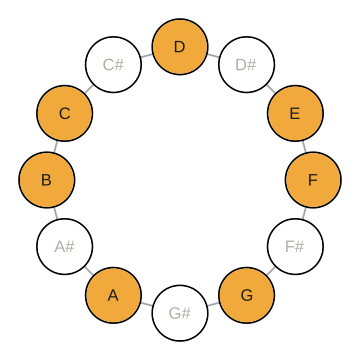
In this ‘part 3’ of the highly recommended recordings of that meet & greet, he explains how he looks at the notes within an octave as a circle, instead of, say, a row and he showed a graphic of his interpretation of such a circle.
He explains how he arrived at his personal concept of approaching the C major scale from the second degree (the D dorian mode), and using it as a vantage point. The reason for this is that he looked at the circle visualization of the scale and found it to be perfectly symmetrical when the D is at 12 o’clock. This is also how he arrived at his naming convention of the ‘x’ as the most basic scale type.
So, in a way not unlike Pat Martino’s approach, he uses ‘conversion to minor’, looking at each scale preferably as a variant of the dorian mode.
The practice of visualizing scales in this way comes from Musical Set Theory, as a way to visualize pitch classes, a system that takes a highly mathematical approach to music and is more commonly used in the world of classical music, especially amongst scholars and composers. A good example of this is the Chromatic Circle.
Modes
A mode is this same set of notes heard from a different starting note. Pick one to see it on the circle.
This scale holds many more chords than these, with extensions, inversions and every voicing on the neck. Find them all in Fretly
No 2 D Melodic Minor

- Allan’s symbol: Dⓧ
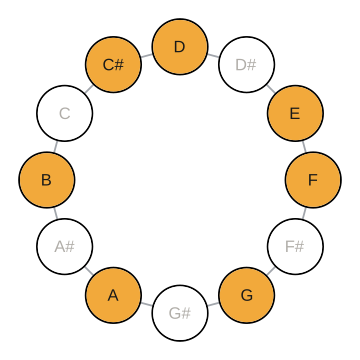
- Formula: 1 - 2 - b3 - 4 - 5 - 6 - 7
Modes
A mode is this same set of notes heard from a different starting note. Pick one to see it on the circle.
Triads
DmD, F, A Dsus2D, E, A Dsus4D, G, A EmE, G, B Esus4E, A, B F+F, A, C# GG, B, D Gsus2G, A, D AA, C#, E A+A, C#, F Asus2A, B, E Asus4A, D, E BdimB, D, F C#dimC#, E, G C#+C#, F, ASeventh chords
DmMaj7D, F, A, C# Dm6D, F, A, B Dmaj7sus4D, G, A, C# Em7E, G, B, D Em6E, G, B, C# E7sus4E, A, B, D Fmaj7#5F, A, C#, E Fmaj7b5F, A, B, E G7G, B, D, F G7b5G, B, Db, F G6G, B, D, E A7A, C#, E, G A7#5A, C#, F, G A7sus4A, D, E, G Bm7b5B, D, F, A C#m7b5C#, E, G, B C#7#5C#, F, A, B C#7b5C#, F, G, BThis scale holds many more chords than these, with extensions, inversions and every voicing on the neck. Find them all in Fretly
No 3 A Harmonic Minor

- Allan’s symbol: Aⓧ-6
- Formula: 1 - 2 - b3 - 4 - 5 - b6 - 7
Modes
A mode is this same set of notes heard from a different starting note. Pick one to see it on the circle.
Backing tracks
Jam this scale over these. They open on the track page.
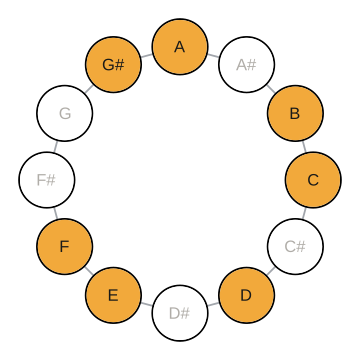
Triads
AmA, C, E Asus2A, B, E Asus4A, D, E BdimB, D, F C+C, E, G# DmD, F, A DdimD, F, Ab Dsus2D, E, A EE, G#, B E+E, G#, C Esus4E, A, B FF, A, C FmF, Ab, C FdimF, Ab, B G#dimG#, B, D G#+G#, C, ESeventh chords
AmMaj7A, C, E, G# Amaj7sus4A, D, E, G# Bm7b5B, D, F, A Bdim7B, D, F, Ab Cmaj7#5C, E, G#, B Dm7D, F, A, C Dm7b5D, F, Ab, C Ddim7D, F, Ab, B Dm6D, F, A, B E7E, G#, B, D E7#5E, G#, C, D E7sus4E, A, B, D Fmaj7F, A, C, E Fdim7F, Ab, B, D FmMaj7F, Ab, C, E Fmaj7b5F, A, B, E F6F, A, C, D Fm6F, Ab, C, D1 more
This scale holds many more chords than these, with extensions, inversions and every voicing on the neck. Find them all in Fretly
No 4 A Melodic Minor #4

- Allan’s symbol: Aⓧ+4
- Formula: 1 - 2 - b3 - #4 - 5 - 6 - 7
Modes
A mode is this same set of notes heard from a different starting note. Pick one to see it on the circle.
Backing tracks
Jam this scale over these. They open on the track page.
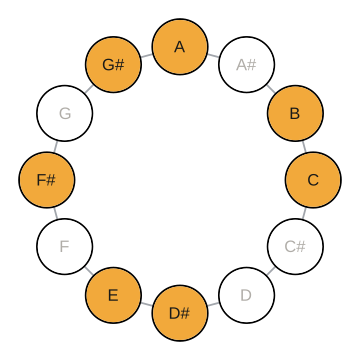
Triads
AmA, C, E AdimA, C, Eb Asus2A, B, E BB, D#, F# Bsus4B, E, F# CdimC, Eb, Gb C+C, E, G# D#dimD#, F#, A EE, G#, B E+E, G#, C Esus2E, F#, B Esus4E, A, B F#dimF#, A, C G#G#, C, D# G#mG#, B, D# G#+G#, C, ESeventh chords
Adim7A, C, Eb, Gb AmMaj7A, C, E, G# Am6A, C, E, F# B7B, D#, F#, A B6B, D#, F#, G# B7sus4B, E, F#, A Cdim7C, Eb, Gb, A Cmaj7#5C, E, G#, B Cmaj7b5C, E, Gb, B D#dim7D#, F#, A, C Emaj7E, G#, B, D# Emaj7#5E, G#, C, D# Emaj7sus4E, A, B, D# F#m7b5F#, A, C, E F#dim7F#, A, C, Eb G#7G#, C, D#, F# G#m7G#, B, D#, F# G#7#5G#, C, E, F#This scale holds many more chords than these, with extensions, inversions and every voicing on the neck. Find them all in Fretly
No 5 G Dominant Diminished (Messiaen M2)

- Allan’s symbol: Goo
- French composer Olivier Messiaen in his work “The Technique of my Musical Language”, presented this scale as the second of seven “Modes of Limited Transposition” (Wikipedia). Thus, it may be referred to as the ‘M2’.
- Formula: 1 - b2 - b3 - 3 - #4 - 5 - 6 - b7
Modes
A mode is this same set of notes heard from a different starting note. Pick one to see it on the circle.
Degrees 3, 5, 7 are omitted: their rotations are identical in pitch-class content to the scale itself (a mode of limited transposition), not a distinct new mode.
Backing tracks
Jam this scale over these. They open on the track page.
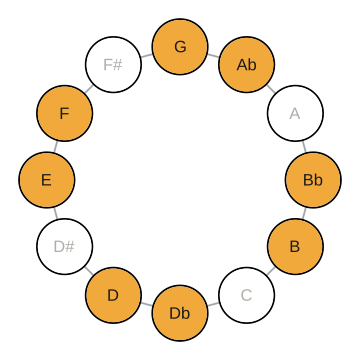
Triads
GG, B, D GmG, Bb, D GdimG, Bb, Db AbdimAb, B, D BbBb, D, F BbmBb, Db, F BbdimBb, Db, E BdimB, D, F DbDb, F, Ab DbmDb, E, Ab DbdimDb, E, G DdimD, F, Ab EE, G#, B EmE, G, B EdimE, G, Bb FdimF, Ab, BSeventh chords
G7G, B, D, F Gm7G, Bb, D, F Gm7b5G, Bb, Db, F Gdim7G, Bb, Db, E G7b5G, B, Db, F G6G, B, D, E Gm6G, Bb, D, E Abdim7Ab, B, D, F Bb7Bb, D, F, Ab Bbm7Bb, Db, F, Ab Bbm7b5Bb, Db, E, Ab Bbdim7Bb, Db, E, G Bb7b5Bb, D, E, Ab Bb6Bb, D, F, G Bbm6Bb, Db, F, G Bdim7B, D, F, Ab Db7Db, F, Ab, B Dbm7Db, E, Ab, B14 more
This scale holds many more chords than these, with extensions, inversions and every voicing on the neck. Find them all in Fretly
No 6 Bb Jazz Major

-
Allan’s symbol: Bbɣ
-
Formula: 1 - 2 - 3 - 4 - 5 - b6 - 6 - 7
Modes
A mode is this same set of notes heard from a different starting note. Pick one to see it on the circle.
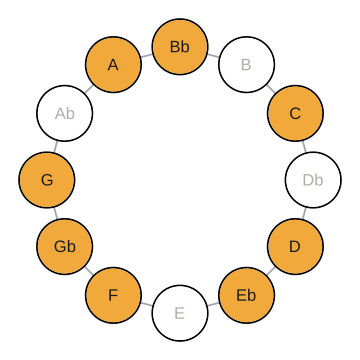
Triads
BbBb, D, F Bb+Bb, D, F# Bbsus2Bb, C, F Bbsus4Bb, Eb, F CmC, Eb, G CdimC, Eb, Gb Csus2C, D, G Csus4C, F, G DD, F#, A DmD, F, A D+D, F#, A# Dsus4D, G, A EbEb, G, Bb EbmEb, Gb, Bb EbdimEb, Gb, A Ebsus2Eb, F, Bb FF, A, C Fsus2F, G, C7 more
Seventh chords
Bbmaj7Bb, D, F, A Bbmaj7#5Bb, D, F#, A Bb6Bb, D, F, G Bbmaj7sus4Bb, Eb, F, A Cm7C, Eb, G, Bb Cm7b5C, Eb, Gb, Bb Cdim7C, Eb, Gb, A Cm6C, Eb, G, A C7sus4C, F, G, Bb D7D, F#, A, C Dm7D, F, A, C D7#5D, F#, A#, C D7sus4D, G, A, C Ebmaj7Eb, G, Bb, D Ebdim7Eb, Gb, A, C EbmMaj7Eb, Gb, Bb, D Ebmaj7b5Eb, G, A, D Eb6Eb, G, Bb, C13 more
This scale holds many more chords than these, with extensions, inversions and every voicing on the neck. Find them all in Fretly
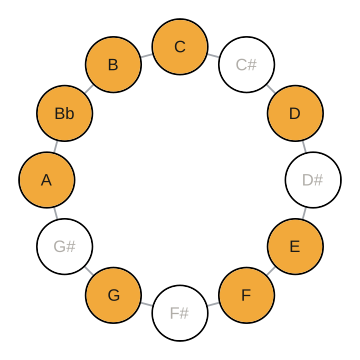
No 7 C Jazz Dominant

- Allan’s symbol: C7ɣ
- Formula: 1 - 2 - 3 - 4 - 5 - 6 - b7 - 7
Modes
A mode is this same set of notes heard from a different starting note. Pick one to see it on the circle.
Triads
CC, E, G Csus2C, D, G Csus4C, F, G DmD, F, A Dsus2D, E, A Dsus4D, G, A EmE, G, B EdimE, G, Bb Esus4E, A, B FF, A, C Fsus2F, G, C Fsus4F, Bb, C GG, B, D GmG, Bb, D Gsus2G, A, D Gsus4G, C, D AmA, C, E Asus2A, B, E4 more
Seventh chords
Cmaj7C, E, G, B C7C, E, G, Bb C6C, E, G, A C7sus4C, F, G, Bb Cmaj7sus4C, F, G, B Dm7D, F, A, C Dm6D, F, A, B D7sus4D, G, A, C Em7E, G, B, D Em7b5E, G, Bb, D E7sus4E, A, B, D Fmaj7F, A, C, E Fmaj7b5F, A, B, E F6F, A, C, D Fmaj7sus4F, Bb, C, E G7G, B, D, F Gm7G, Bb, D, F G6G, B, D, E8 more
This scale holds many more chords than these, with extensions, inversions and every voicing on the neck. Find them all in Fretly
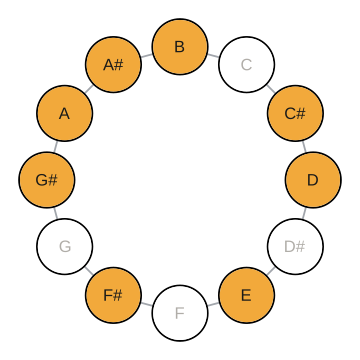
No 8 B Bebop Dorian

- Allan’s symbol: Bxɣ
- Formula: 1 - 2 - b3 - 4 - 5 - 6 - b7 - 7
Modes
A mode is this same set of notes heard from a different starting note. Pick one to see it on the circle.
Triads
BmB, D, F# Bsus2B, C#, F# Bsus4B, E, F# C#mC#, E, G# C#sus4C#, F#, G# DD, F#, A D+D, F#, A# Dsus2D, E, A EE, G#, B Esus2E, F#, B Esus4E, A, B F#F#, A#, C# F#mF#, A, C# F#+F#, A#, D F#sus2F#, G#, C# F#sus4F#, B, C# G#dimG#, B, D AA, C#, E4 more
Seventh chords
Bm7B, D, F#, A BmMaj7B, D, F#, A# Bm6B, D, F#, G# B7sus4B, E, F#, A Bmaj7sus4B, E, F#, A# C#m7C#, E, G#, B C#m6C#, E, G#, A# C#7sus4C#, F#, G#, B Dmaj7D, F#, A, C# Dmaj7#5D, F#, A#, C# Dmaj7b5D, F#, Ab, C# D6D, F#, A, B E7E, G#, B, D E7b5E, G#, Bb, D E6E, G#, B, C# E7sus4E, A, B, D F#7F#, A#, C#, E F#m7F#, A, C#, E11 more
This scale holds many more chords than these, with extensions, inversions and every voicing on the neck. Find them all in Fretly
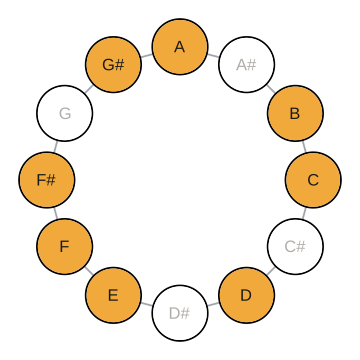
No 9 A Bebop Melodic Minor

- Allan’s symbol: Aⓧɣ
- Formula: 1 - 2 - b3 - 4 - 5 - b6 - 6 - 7
Modes
A mode is this same set of notes heard from a different starting note. Pick one to see it on the circle.
Triads
AmA, C, E Asus2A, B, E Asus4A, D, E BmB, D, F# BdimB, D, F Bsus4B, E, F# C+C, E, G# DD, F#, A DmD, F, A DdimD, F, Ab Dsus2D, E, A EE, G#, B E+E, G#, C Esus2E, F#, B Esus4E, A, B FF, A, C FmF, Ab, C FdimF, Ab, B3 more
Seventh chords
AmMaj7A, C, E, G# Am6A, C, E, F# Amaj7sus4A, D, E, G# Bm7B, D, F#, A Bm7b5B, D, F, A Bdim7B, D, F, Ab Bm6B, D, F#, G# B7sus4B, E, F#, A Cmaj7#5C, E, G#, B Cmaj7b5C, E, Gb, B D7D, F#, A, C Dm7D, F, A, C Dm7b5D, F, Ab, C Ddim7D, F, Ab, B D7b5D, F#, Ab, C D6D, F#, A, B Dm6D, F, A, B E7E, G#, B, D13 more
This scale holds many more chords than these, with extensions, inversions and every voicing on the neck. Find them all in Fretly
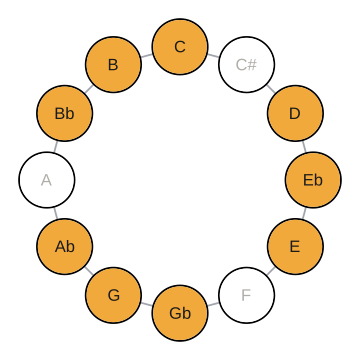
No 10 C Tcherepnin (Messiaen M3)

- Allan’s symbol: Cooo
- Formula: 1 - 2 - b3 - 3 - #4 - 5 - b6 - b7 - 7
- French composer Olivier Messiaen in his book La technique de mon langage musical (“The Technique of my Musical Language”), presented this scale as the third of seven “Modes of Limited Transposition” (Wikipedia). Thus, it may be commonly referred to as the ‘M3’.
- This scale was also a defining part of the musical language of composer-pianist Alexander Tcherepnin, and because of this it also came to be known as the “Tcherepnin scale”, particularly because famous author-composer Nicolas Slonimsky named it thus in his 1968 book Alexander Tcherepnin Septuagenarian (pg. 19–20).
- Messiaen Mode 3 - Key of C
- Messiaen Mode 3 - Key of D
- Messiaen Mode 3 - Key of G
- Messiaen Mode 3 - Key of A
- Rick Beato on the Modes of Limited Transposition.
- Here’s a (crude) clip of Nelson Veras during a clinic at the Conservatory of Amsterdam expounding on improvising with this scale. And here.
Modes
A mode is this same set of notes heard from a different starting note. Pick one to see it on the circle.
Degrees 4, 7 are omitted: their rotations are identical in pitch-class content to the scale itself (a mode of limited transposition), not a distinct new mode.
Triads
CC, E, G CmC, Eb, G CdimC, Eb, Gb C+C, E, G# Csus2C, D, G D+D, F#, A# EbEb, G, Bb EbmEb, Gb, Bb Eb+Eb, G, B Ebsus4Eb, Ab, Bb EE, G#, B EmE, G, B EdimE, G, Bb E+E, G#, C Esus2E, F#, B Gb+Gb, Bb, D GG, B, D GmG, Bb, D12 more
Seventh chords
Cmaj7C, E, G, B C7C, E, G, Bb Cm7C, Eb, G, Bb Cm7b5C, Eb, Gb, Bb CmMaj7C, Eb, G, B C7#5C, E, G#, Bb Cmaj7#5C, E, G#, B C7b5C, E, Gb, Bb Cmaj7b5C, E, Gb, B D7#5D, F#, A#, C D7b5D, F#, Ab, C Ebmaj7Eb, G, Bb, D EbmMaj7Eb, Gb, Bb, D Ebmaj7#5Eb, G, B, D Eb6Eb, G, Bb, C Ebm6Eb, Gb, Bb, C Ebmaj7sus4Eb, Ab, Bb, D Emaj7E, G#, B, D#33 more
This scale holds many more chords than these, with extensions, inversions and every voicing on the neck. Find them all in Fretly
Internal Links
These Scales for 4-string Bass Guitar
Allan Holdsworth’s 10 Most Usable Scales for 4-string Bass
Just for the Curious: Five More Scales
Recommendations
Brett Stine - In the Mystery
https://www.brettstinemusic.net
The definitive work for anyone interested to learn about Holdsworth’s approach.
Highly recommended.
The Allan Holdsworth Information Center
Just for the Curious
http://threadoflunacy.blogspot.com/p/just-for-curious.html
Related Entries
- D Dorian
- D Melodic Minor
- Messiaen M4 Scale in A
- Messiaen M4 Scale in C
- Messiaen M4 Scale in D
- Messiaen M4 Scale in E
- Messiaen M4 Scale in F
- Messiaen M4 Scale in G
- The Minor Pentatonic Scale
- Heptatonic Scales with a 4-Semitone Maximum